November 2025
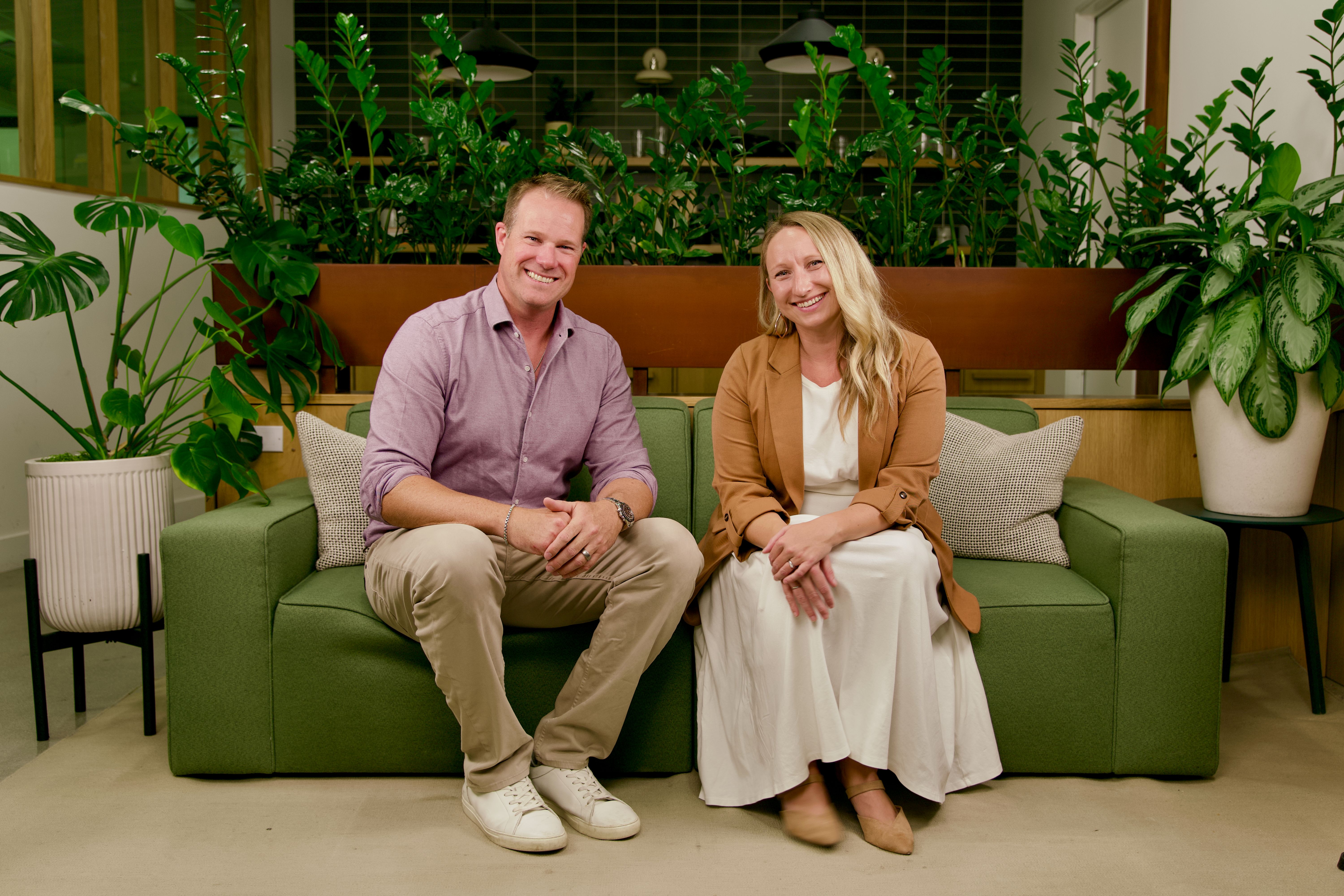
In this episode of Couchside Conversations, Kevin Rex and Stacey McKinnon explore the difference between the two and how to set healthy boundaries with colleagues and loved ones.
Tune in if you’re interested in…
• Why “presence” is a healthier, more realistic goal than balance
• How to set expectations that reduce guilt and stress• The truth about working from home and what people really want: flexibility
• Simple habits to feel more grounded in work, family, and life
Watch previous episodes here:
How Your Money History Impacts Your Decisions | Morton Wealth
The Economic Signals We Can't Ignore And What to Do About Them | Morton Wealth
Welcome to another episode of Couchside Conversations. I'm here with my colleague Kevin Rex and I am Stacey McKinnon, and we are here to talk about work life balance, which we actually don't believe in. So I'm not really sure why we titled the episode that.
We're going to talk about, why we don't believe in it.
Exactly. And we actually, I think, maybe do a very good job of this because you just got back from Cabo. Yes, this weekend. I just got back from Tahoe yesterday. And so I feel like we're winning the work-life balance game right now. So this is a perfect time to talk about it.
We're winning. But let's see if we can convince other people that that's the case. I know we're aligned, but let's talk through it and see if what we think is actually relevant to others.
Well, I think part of the reason we're winning it is because we gave up on it. Yes. Yeah. Because I think it's this fallacy that exists where we are all striving for work-life balance. I think of it like the Mission Impossible movies, where he was always going to try to win the mission, and then there was somebody one step ahead of him, killing it. That's what pursuing work-life balance feels like to me—it feels almost impossible.
And it was interesting because we were reading some statistics before this episode, and the statistics said two-thirds of Americans believe basically that work-life balance is impossible. And that really resonates with me.
Yeah, that's my question i, is it because employers aren't giving them theroom to have work-life balance, or do people not take advantage of their situations, or do they feel guilty? and
I want to know what the reason is behind that. Because I don't believe that it's just one or the other. I think it's probably a combination of all of those things.
Yeah, I think that's probably true. It's like, how do you work somewhere that gives you some freedom and flexibility, but then also you hold yourself to high standards to achieve what you need to achieve. And I think that's something interesting that’s come out of conversations around this—you have to have a lot of discipline to have a good work-life balance.
But I'd be interested to hear your perspective, because as I explore this, I've really changed my language to be more about achieving presence as opposed to achieving balance. And I think you feel the same.
Yeah, the word balance just inherently means things are equal or fair along the way. And I just don’t think balance is really achievable in every single moment. There’s always give and take. The word presence for me is really important. Depending on where you are in your life, whether with your family or at work, just being fully present.
And I also think that presence has gotten so hard. I don’t want to be the generation that says, “It’s so much harder for us,” but when I think about my parents, my dad finished work at 5:30, and when he came home, he didn’t bring work with him. He didn’t have clients calling him. He didn’t have a cell phone pinging emails. Now and then, he’d bring home a report, but he was present.
He’d walk in the door, we’d tackle him, we’d play sports, we’d watch TV, we’d do those things. Now we have that pull “Hey, how was your day?” and your phone’s pinging. So that presence is really hard to achieve. Now we are fighting it more than ever.
You’re fighting work, life, and tech.
Yeah, tech’s the hardest one.
It’s like a little sneaky samurai that came in from the side to attack us because it’s true. It’s been medically proven that it’s addictive to look at our phones, and that’s really challenging to overcome.
Yeah, and you talk about being in Cabo. You're in Cabo, looking on Instagram, looking at other people’s vacations! “Hey, look, they’re on vacation too.” And it’s like we’re not even present in this beautiful place with the people we love. There’s always that tech in your ear about what else is out there.
So that balance is really hard to achieve, and that’s why I think we’ll talk a lot about presence today.
Yeah, for sure.
Setting expectations is a really big deal. With your family, with work. How do you set expectations around being present or where your time and energy is focused?
Well, it’s interesting because we joked about “winning” the work-life balance game because I feel like I’m winning right now. But one reason I think I win sometimes is that I communicate to the people what I’m doing and why.
I just spent time in Tahoe and communicated to everyone at work, “Hey, I’m in Tahoe with my husband. This is an important time for me.” But now I’m back, my husband’s still in Tahoe, but I’m here and working. I find compartmentalizing is really helpful for me. It’s about admitting where I am is where I need to be. As long as everyone knows that, they can’t fight me on it. Where I’ve gotten in trouble before is when I don’t tell people. Like, if I’m working extra hard but my husband made dinner and I don’t make it home and that’s where I feel guilt. But if I tell him, “Hey, I’ll be home late,” then I don’t feel guilty. Communication is the way through the guilt.
Yeah, communication and expectations. You can say, “I’m going to be present at work,” and he can say, “Okay, then I’ll stay in Tahoe.” The one thing I struggle with most is that I’ll come out of a meeting to 70 missed texts: “Hey, we want to set up a birthday dinner. Who can do 2:00 or 4:00?” They can’t move on without my response, but I’m at work.
So I feel guilty for not getting back to them. But I set expectations, “Hey guys, between 8 and 5, best effort. I’ll try to get back to you.” There are days I don’t look at my phone because I’m busy. As long as they know that, they might still get mad, but at least I’ve set that expectation and communicated that. You're absolutely right, getting that upfront allows you to be very present on the other side of things.
I actually took my Apple Watch off because I needed to control my phone. My phone cannot control me. The amount of communication coming in is so intense.
It pings you for everything. The best part—it’s like, “Oh, there’s a storm cloud over Simi Valley.” And here we are trying to help people manage money. That’s the worst—being pulled in all these directions. So I think that’s a great way.
You’ve got to put it away. I even leave my phone locked in the car when I go out to eat, so when I’m with people, I’m not tempted to pick it up. You know what really annoys me, though? When the restaurant has a QR code menu, you’re like, “Okay, I get it.”
Well, you mentioned spending time with family. One of the things I struggle with is guilt. I have a puppy and no kids, but she throws toys at me when I work from home. I feel so guilty, like, “Oh my gosh, she wants to play,” but I also have so much to do. You deal with this, you have three kids and a big family. How do you manage the guilt?
It goes back to balance versus presence. My kids don’t expect all of my time, but they do expect that when I’m with them, they get all of me. They know when you’re not engaged. When we were just in Cabo, we missed their sporting events. But when I came back and said, “Tell me about your game,” they lit up. They didn’t care that I missed it because they got to engage and share with me.
Unfortunately, my kids are old enough now that I can say, “Look, I’m going on this trip for work. I’m not going to be here, but here’s why.” There are lessons in that—working hard, locking the phone away.
We get in the car, and the first thing they want is an iPad. I say, “No, we have you captive, how can we engage?” But then you look at my wife or me, and whoever’s in the passenger seat is on their phone. It’s about setting that example and showing that being present matters.
I do feel that guilt all the time. That’s why if you give them your full attention, you feel less guilty later.
And I think you’ve shared with me that sometimes you even tell them, “It’s important for Mom or Dad to work, and it’s important for us to be here with you in these ways.” Teaching them that work doesn’t have to be separate, it can be an example of what they’ll do someday. Yeah, I think that teaches a lot of resiliency.
The most important the biggest job that I feel is raising my children. This is not getting emotional, but I get emotional over it. I read a stat 90% of the time we spend with our kids is before age 18, and 90% of that time is by age 12. So like 75% of my time with my kids is before 12. Mine are 11, 10, and 6. It’s going by, and that really pulls on my heartstrings. We will get a lot of quality time in the future, and I really hope that my children are the ones who stay close by, but you never know. All those things that you miss or not even the things you miss, but what we are talking about is the things when you're there but not present, you're actually missing that. So trying to be that example for them and trying to engage that's meaningful, I think really matters a lot.
The other piece of this, though, is what about taking care of Stacey or taking care of Kevin, what about the me time? Making sure you're not just working and everyone else. What about you?
Well, this is probably where I fail the work-life balance game most. It’s easy to sacrifice yourself. It’s hard to say, “This is time spent with me.” Time feels limited resource. So if I am not spending it in my work life, I want to make sure I am spending it in my family life. Just to balance it out. I think this is one of the most important things that gets missed a lot. It is important to have your own space and time.
But when I do it best, it’s when I wake up early. If I go to bed early, wake up at 5:30 or 6, and have an hour to myself. I can work out, have coffee, relax, listen to music. The rest of my day is better.
Sometimes we think we need sleep, but sometimes we need the wake up to take a moment to not be rushed. My best days are when I wake up early, answer emails, and set myself up for success. I found that finding me time is just managing my time a little bit better. There’s a psychology term, pre-deciding. I pre-decide that I’m waking up early and doing these things. Because if you make decisions in the moment, it’s easy to talk yourself out of it.
Exactly. Especially in the morning. Thirty more minutes sounds a lot nicer.
Yeah, but if you pre-decide ahead, hey if I do these things, then I am set up for success and makes it goes a lot smoother. And you do this too, but with friends.
Yeah, my “me time” is never just me. I don't know if I am weird but I don't really like being alone. I get fulfilled and reinvigorated spending time with people. I do need time to set myself up for success, and I am a big believer that the extra 15 mins of sleep or 15 mins of just setting your day up is so important. I also play adult basketball and if you ask any of the guys on the team, it’s fun, but really it’s just a group of guys laughing and talking about our days. It makes me feel better about my life.,
We talk about work, family—everything. That’s my me time. I am not at work, and I am not with my kids. It is not something I selfishly do. It’s hard, because sometimes there’s soccer practice or other family things, but I try to hold myself accountable.
It’s easy to say, “Oh, I have a work meeting,”
But finding something pressure-free—well, mostly pressure-free—is good.
Even though every game feels like the NBA championship.
It’s something that brings joy. Finding time where you get that little bit of joy is so important.
I feel relaxed, even though others wouldn’t call it relaxing. I’ll get a massage if I feel tense. There are things I do for myself. I guess those are the selfish things I engage in.
I love that.
In the world today, there’s a battle between working from home and working at the office. People think that working from home equals a better work-life balance. Because you're not commuting and you save that time or you're not engaging in conversations at the office. What are your thoughts?
I think it's an interesting problem to solve. People actually want flexibility, not necessarily work from home. Working from home can lead to multitasking—laundry, dishes, distractions. You stop and start constantly.
There’s a term called context switching—you lose 10–15% of productivity doing that. It’s also hard to know when to “clock out.” When I’m at the office, my 20-minute commute shifts my mindset.
So I don’t think working from home is all it’s cracked up to be. But being in the office all the time can be exhausting for some people too.
We’ve structured it so we’re here Monday through Thursday, 9:30–3:30. That is 6 hour core blocks. I love that. It gives us time together to work as a team, which is important to use but also gives the flexibility to do a workout in the morning or coach a kids soccer game at night. I think that work-life balance is being present where you are and its also important to have some flexibility. Too much flexibility, though, isn’t always good.
Yeah, I agree with you 100%. Work-life balance isn’t about endless travel or constant vacations. It’s about flexibility to go to a kid’s assembly or a doctor’s appointment and still get your work done.
I know for both of us, ill get emails from you at 6 am or 9pm.
Our workdays aren’t just 8–5. Sometimes we work early or late, but we also take time for life. That flexibility gives us the best balance and allows us to be present. I’m grateful to be at a company that gives that to us.
Me too. At the end of the day, being somewhere that hears us but also decides what’s best for the team matters. Too much work-from-home can turn “we” into “me.”
We do a good job of having core “we” time and giving people “me” time.
It's people love being here, and I and I actually do think that there's some inefficiency around being in the I mean, I'm probably the oh, you make my time. I'm, I'm definitely the worst. Like it's I will leave for a meeting ten minutes before the meeting and it's only up, you know, down the hall and I'm still late.
But you're the hallway guy.
Okay, I'll take it. I but I do. There's if I'm at home and I'm like, it's not like not the time that I'm spending is, oh, that shelf is dusty or oh, I need to fix that. And like, at least when I'm distracted at work, there's like a at least I think there's like a culture.
You are. Yeah. You're very big cultural benefit that is Kevin being in the hallway.
So that's what is that fun that's motivating. You hear the stories you beat. So I mean, just who I am as a person, I could never work from home, but I also just don't think that that gives the balance that people think it would.
Yeah. I totally agree with you.
Well, thank you so much for this conversation. This was fun. Maybe we’ll change the title to Presence: Why It Matters. No more work life balance.
And we can do it from a remote destination.
I’ll go to Cabo—we’ll film part two!
All right, let’s play our favorite game—This or That.
Love it.
Okay, first question: Would you rather catch up on work early in the morning or late at night?
I prefer early in the morning. I’d love to do that, but my wife does it late at night, so I do it then with her and it’s kind of our time together. My preference would be in the morning but she is not getting up.
For you—if you could snap your fingers and have either 50 emails cleared out or your house deep cleaned?
50 emails. I have email anxiety. I’m the person who starts every day with zero emails in my inbox. Just so that I clean slate it.
Next question—would you rather have a full-time nanny or a housekeeper?
I have a full-time nanny and could not live without her, so nanny, 100%.
Makes sense.
Okay, would you rather have a digital calendar or paper planner?
Digital. When I started my career, I wrote my notes every day. Then the next day, I’d have to rewrite the unfinished ones. I care too much about efficiency. I need a digital calendar where I can move tasks instead of rewriting them.
Thank you so much for joining us on another episode of Couch Side Conversations. We hope you enjoyed it. There are a lot of other great episodes, so please check them out.
The information presented herein is for discussion and illustrative purposes only and is not intended as financial advice. The views and opinions expressed by the speakers are as of the date of the recording and are subject to change. Morton Wealth makes no representation that the strategies described are suitable or appropriate for any person. It should not be assumed that Morton will make recommendations in the future that are consistent with the views expressed herein. You should consult with your financial advisor to thoroughly review all information before implementing any transactions and/or strategies concerning your finances.