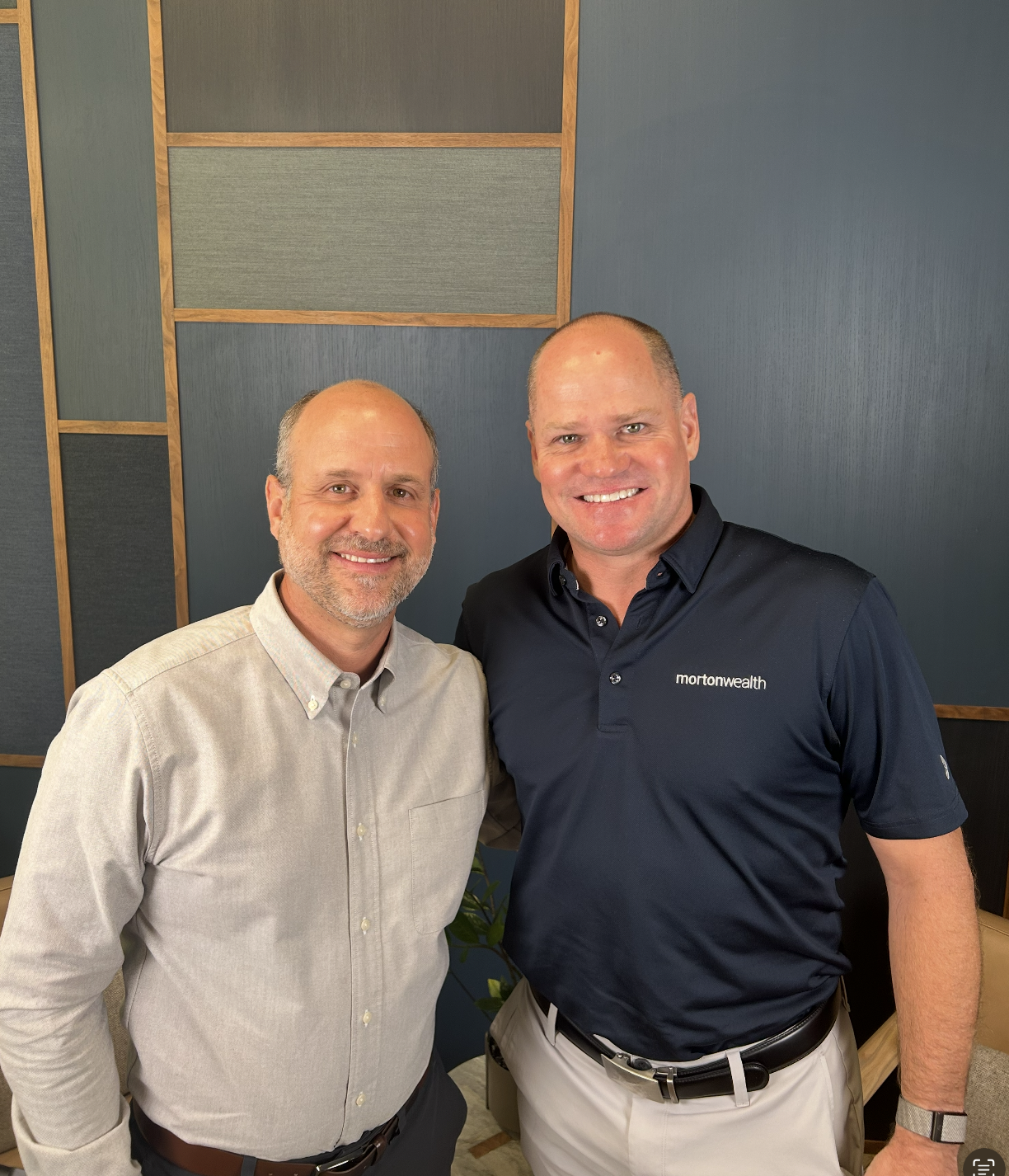
Chris: Jeff, looking forward to the conversation today. A lot oftimes when it comes to investing, it is kind of following where the moneyflows. In the headlines, the tech industry and Nvidia and cloud computing andthe AI space have gotten a lot of the coverage in terms of where new capital isbeing deployed. But what is sort of hidden underneath is the rise ofalternatives within our industry. If you look back twelve years ago, there wasabout $7 trillion of capital invested in alternatives. A couple of years ago in2024, that number is now $18 trillion. Fidelity has said that the averageinstitutional investor allocates about 25 percent of their capital toalternative investments versus the retail investor at around 5 percent. Andthey project that alternative investment is going to grow to be a $30 plustrillion market by 2030. In four years, it is virtually going to double. I amlooking forward to having a conversation around what alternatives are, why welike them, and what value they provide. Let us start with what is analternative.
Jeff: It is the trillion dollar question. We get asked it allthe time. And I think our standard answer is typically that it is reallyanything other than a stock or a bond. That kind of makes sense. But as we weretalking about this the other day, I was rethinking that answer a little bit.Maybe to play devil's advocate, I wanted to flip it on its head. Because as anasset allocator looking to invest our $3 plus billion into traditional andalternative assets, when push comes to shove, everything, including alternativeassets, is either a stock or a bond. What I mean by that is you have twochoices: you can buy that asset, which is like a stock or equity, or you canlend on that asset. More conservative, be in a more secure position, and makeincome along the way.
Chris: So there are basically two asset classes. A loan is justa bond. All loans are bonds.
Jeff: Including alternative. Exactly.
Chris: And the other part is growth. So you have the incomeside, bonds, and then you have the growth or appreciation. A piece of realestate going up in value or a stock going up in value. That is why everythingis either a growth asset or a bond.
Jeff: Three simple examples: one traditional, two alternatives.The traditional example would be Apple. You have two choices: buy Apple stockor buy an Apple bond. Real estate, an alternative, same thing. You could buythe piece of property like a stock or equity, or you can make a loan on it. Aprivate business in the healthcare space, same exact example. You could make anequity investment or make a loan. Really all alternatives are doing is openingup a larger universe of options to stock or bond investing.
Chris: And to me that just makes sense. I do not quiteunderstand the people who hear the word alternative and get nervous. What theyare doing is listening to the traditional finance industry saying there arelots of public companies and public credit that we can access, and that isenough. But what they are really doing is limiting themselves from accessingsome amazing things just because the industry or the people they work with arelimiting those options. Whether it is a public company or a private company, itis the same thing. You are investing in a company. Outside of just publicstuff, there are so many amazing things you could invest in that providegrowth, income, or diversification.
Jeff: If you focus solely on public traditional assets, you arevery limited in your options. A simple analogy: when you are investing, you area shopper. You are looking for value, quality, growth. Say you go to thesupermarket looking to buy fruit. There is a section with berries, a sectionwith stone fruit, peaches and nectarines, and a section with apples and pears.A traditional investor would say I can only invest in apples and pears. That isall I know. I am going to completely avoid those other two options. Verydifferent from us where we have so many more choices. And sometimes things arein season and sometimes they are not. You might want to overweight apples andpears at a certain time and underweight them at a different time. It is afrustration of ours that our industry plays it safe according to the statusquo. But when you are investing your nest egg, you need to explore otheroptions to diversify and protect your portfolio.
Chris: When you were talking about that analogy, it makes methink of Trader Joe's. One of the benefits is you do not have a lot of options.There is one peanut butter. But when I go shopping for my family, I cannot justget everything I need at Trader Joe's. I have to go to Costco, which issomewhat overwhelming, but they have those cotton candy grapes and my kids likethem. Just sticking with the status quo and limiting options means you are notopening up this whole world that is available to you. Most institutions do nothave the research, the team, or the access to some of these privateinvestments. But people really need this for diversification.
Jeff: Diversification. One of our main investment tenants. Whenwe think about true diversification, that is one of the limitations ofinvesting only in public stocks and bonds. Most would say they have adiversified portfolio if they have a dozen mutual funds and lots of differentbonds. But in tough times, diversification in traditional assets does notreally work. 2020 was a great example where it did not really matter what typesof stocks you were in. They basically all went down together. In really badyears like 2000 or 2008, whether in Europe or Japan or US stocks, they all wentdown together. And what was really unusual about 2022 was that bonds fell aswell. The broad-based bond index was down 13 percent. Whether stocks or bonds,it did not matter how diversified you were. Your portfolio was going to godown. You did not have that rainy day protection, that umbrella. Alternativeinvestments of lots of different shapes and sizes had the ability to and didprotect in that environment.
Chris: What is so interesting about the bond index, theBloomberg aggregate: if you look at the last five years the performance isbasically flat. If you look at the last ten, it is only up about 1 percent.
Jeff: Think about that over a five year period. You put moneyin a bond, you are making income along the way. But it was offset by pricedepreciation because of rising interest rates. Literally you made zero dollarsin a safe asset, in air quotes, in a time when inflation was high. That doesnot sound so safe.
Chris: But the industry looks back and says, if you look backover the last 45 years, stocks and bonds provided diversification and both didwell. A few years ago there was an article that said the two best investors ofthe last 40 years were Warren Buffett and Bill Gross. Buffett invested instocks. Gross invested in bonds. And if you zoom out, you realize that stocksand bonds from 1980 until 2022 were moving together and making people moneybecause interest rates were going down.
Jeff: It was a Goldilocks environment. We have been so luckyfrom 1980 until about 2022. Interest rates were coming down from the low to midteens in the early 80s, down to basically zero by 2020 or 2021. That was just atremendous wave to ride in both stocks and bonds. You could have been throwinga dart at a dartboard in stocks and bonds and you would have done well in both.
Chris: But our viewpoint is that with higher inflation, higherinterest rates, challenges going on with the economy and the dollar, and othermacroeconomic pressures, the next 40 years is likely to be very, very differentthan the previous 40 years. And so just owning stocks and bonds is notsufficient.
Jeff: Absolutely. And of course stocks and bonds are going tobe part of the portfolio. But you need lots of different asset classes,alternatives outside of traditional stocks and bonds that can hold their own ina more volatile, inflationary, or rising interest rate environment. We have nocrystal ball. But if the next couple of decades look different than the lastfew, and that is probably more likely than not, you just need to be diversifiedin some of these other asset classes.
Chris: What excites me as a client-facing advisor is being ableto invest in things that are not just a stock or a bond. Really goodopportunities, whether it is real estate, a private company, or healthcareroyalties. Healthcare royalties I think is an interesting one, becauseregardless of what is happening with interest rates or the economy, people aregoing to need those drugs and services to live. And it is extremely resilientand diversified from other asset classes.
Jeff: It makes intuitive sense. When you say healthcareroyalties, in essence we participate alongside pharmaceutical or medical devicecompanies that are selling a product. We earn income, a royalty stream alongwith their sales stream. And really resilient. Because in a tough economictime, even if someone loses their job, the last thing they are going to do isstop taking their medication. We found that healthcare in particular is anasset class we really lean into. It does not really matter what is going tohappen with interest rates. Whether rates go up or down next week based on theFed announcement is not going to affect if someone is going to take theirmedication or go to the doctor.
Chris: Obviously we like alternatives. We lean in and embracethem. There are some downsides to this growth of new dollars going into thisspace. Let us talk about some downsides with alternatives, and then somepositives.
Jeff: Downsides. As any asset class grows in scale, things getsloppy. Underwriting standards and discipline can slip. We have seen moremediocre products emerge as more money has come into the alternative space. Thetruth is that is the same in public markets. The public market is incrediblycrowded. The same phenomenon has happened in some areas of alternatives wheretoo much money has chased certain products. So you just have to be moreselective. For us, that is not really such a challenge because this is what wedo. We have been working with alternatives for decades. We can easily spotwhere an area is becoming crowded. But it is definitely something we arewatching.
Chris: What comes to mind is somebody like Blackstone. Big name.They can raise a lot of money. If they raised $15 billion overnight and had toput it to work, they are going to end up buying a lot of things they might notlike because by mandate they raised the money and have to deploy it. Makingsure you are with the right groups that have the right structure, patience, anddiscipline to deploy dollars into things they like. And being willing to say:right now we do not like enough stuff to put this money to work, so we are notgoing to ask for more.
Jeff: Whenever you are looking to allocate money with aninvestment manager in any area, it is all about the people. As much as you areassessing the investment itself, so much is an assessment of the individualsrunning those strategies. Is there alignment? Are they disciplined and do theystick to their knitting? In the alternative space especially, we spend a lot oftime on that.
Chris: To button up the downsides and opportunities withalternatives: they are a little bit less liquid. Sometimes they can feel morecomplex. Although I could argue that Apple is probably the most complexbusiness globally you could ever value.
Jeff: I am so glad you hit on complexity, because this is suchan area of misunderstanding. Yes, to some degree alternatives are on thesurface more complex. And there are some structural complexities where you haveto be an expert to navigate them. But at their core, compare a company ascomplex as Apple. Pull up a 10-K on Apple and read through it. Your eyes willgo numb over the utter complexity compared to a loan on an underlying simplebusiness or a piece of real estate. In many ways, a lot of alternatives areactually much more simple and easier to wrap your head around than a complexcompany like Apple. People avoid alternatives not because they are genuinelymore complex. It is a lack of familiarity. And they associate a lack offamiliarity with complexity. Not necessarily the case.
Chris: Sometimes clients buy a rental home and think it is asafe, simple real estate investment. Well, it is an alternative by ourstandards. The upside is potential income. A lot of what we do in thealternative space generates good amounts of income compared to traditionalbonds. And there is more diversification, with the key being reducedcorrelation.
Jeff: And that comes down to our third tenant, resilience.Building resilient portfolios. Of course we want upside and growth. But so muchof our focus is protecting on the downside. If you can avoid missteps along theway, the compounding effect of returns over time can be very powerful. It isnot just about capturing upside but limiting downside. And going back to thefruit analogy: if you have more options at your disposal to protect anddiversify your portfolio, you will just be more protected on the downside.
Chris: You mentioned our tenants: build for resilience notprediction, generate consistent income. What I have noticed in working withclients is they do not make spending decisions based off account value. Theymake them based off the income coming in. If our job is to help our clientslive the best life and do the things they want to with their money, income is akey component for allowing them to feel confident and comfortable making thosedecisions.
Jeff: And traditional bonds just do not cut it for income. I amnot saying we avoid them. We are selective and we do have traditional bondexposure. But you just cannot get the income you need from traditional bondinvesting alone. You have to go outside of that. Especially a few years agowhen interest rates were zero and traditional investors were stuck buyingtraditional bonds, they were stuck buying those bruised apples in themarketplace because they had no other choice. That is just incredibly limiting.
Chris: Thank you so much for the conversation today.Alternatives are a big, important tool that people can use to better protectthemselves, generate income, and have diversification. Because frankly, stocksand bonds as we have discussed are not sufficient enough going forward.
Jeff: And going back to the intro: do not be intimidated byalternatives. At their core, it is just a different way to think about how youinvest in a stock or equity and how you invest in a bond or a loan. Do notlimit yourself just to public stocks and bonds. Go outside of that. There are alot of opportunities to invest in alternative stocks or alternative bonds anddiversify your portfolio.