August 2026
Featuring
Chris Galeski, Director of Growth & Advice and Partner, Morton Wealth
Beau Wirick, Director of Financial Planning, Morton Wealth
On October 29th, we are hosting our fifth annual Investor Symposium, and this year’s theme is “Designed for Life.”
It is a phrase that captures what financial planning is actually for: not hitting a number for its own sake, but using your resources to build the experiences, relationships, and life you want. In this episode, Chris and Beau (who will be returning as our MC!) highlight three sessions that are going to be featured at the event, explain why the questions being covered matter more than most people realize, and make the case for why this year is a particularly important moment to get the answers right.
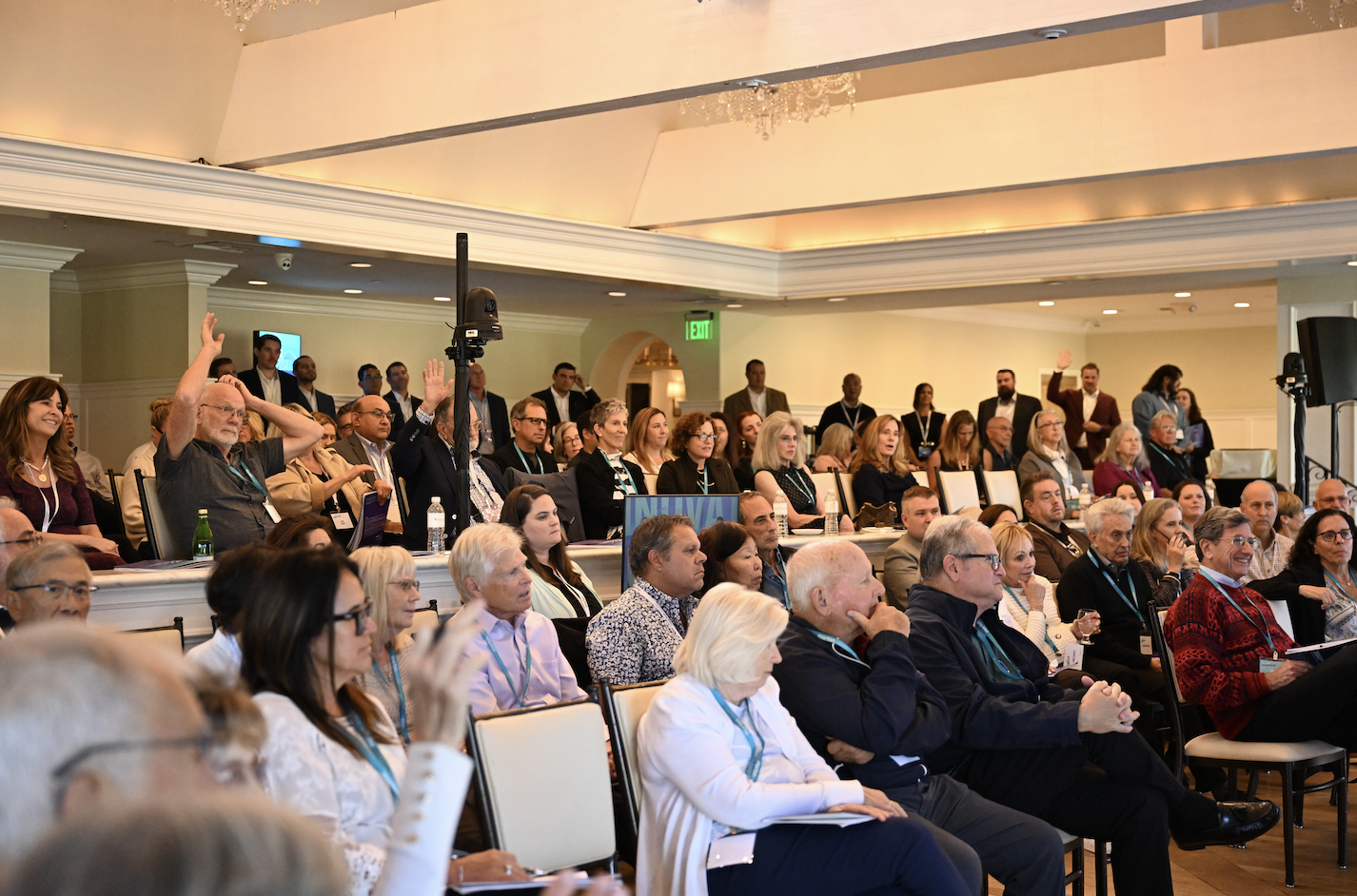
400+ guests attended last year's symposium, and seats fill up quickly. To RSVP, click here.
We'd love to see you there!
0:00 – Intro: announcing the Morton Wealth Annual Investor Symposium
0:52 – What makes Morton different: helping clients design a life, not just a portfolio
1:45 – Second home in Park City: what "design for life" actually looks like in practice
3:21 – Session 1: defining your target net worth
4:41 – The client who worked 7 extra years because of an article she read
6:01 – Four ways to reach retirement: save more, spend less, work longer, or invest smarter
7:04 – Session 2: not all risk is created equal
9:12 – The San Diego landlord story: why real estate isn't always as safe as it looks
12:06 – Session 3: every generation has a bubble and never sees it coming
13:13 – Isaac Newton lost his entire net worth in the South Sea bubble
13:34 – Avoiding FOMO so you don't get knocked off course from your number
What is Morton Wealth's Investor Symposium?
It is Morton Wealth's annual event for clients and prospective clients, bringing together advisors, specialists, and guest speakers to cover the financial topics that matter most to investors right now. This year's theme is Designed for Life, organized around the idea that financial planning is not just about accumulating money but about using resources to build the life and experiences you actually want. The event takes place on October 29th.
What sessions will be covered at this year's symposium?
Three sessions are highlighted in this episode. The first addresses how to define your personal target net worth rather than relying on generic benchmarks. The second covers portfolio risk and what diversification actually means beyond the standard stocks-and-bonds framing. The third traces the history of market bubbles from the South Sea Company in 1720 through today, with a focus on how FOMO and herd mentality push prices to unsustainable levels and how to avoid being caught off course by them.
Why should I attend the Investor Symposium this year specifically?
Beau describes the energy in the room as something that emulates the heartbeat of Morton Wealth. The sessions are built around the questions clients are already asking, and the format allows for the kind of depth that a standard quarterly review does not. Chris also notes that with semiconductors at all-time highs, margin borrowing at record levels, and valuations near dot-com territory, this is a particularly important moment to be having these conversations in a room with people who are paying close attention.
What does "Designed for Life" mean as a financial planning philosophy?
It is the idea that money is a means to an experience, not an end in itself. At Morton Wealth, this shows up in client conversations where the question is not just whether a financial decision makes mathematical sense, but whether it serves the life the client is trying to build. The Park City second home conversation Chris describes in the episode is a good example: the answer was yes, not because of the rental income calculation, but because of the summers and winters that property would create for a family whose kids are growing up and beginning to scatter.
What makes this event different from a standard financial education seminar?
The conversations are built around real scenarios, real client stories, and the actual market environment rather than generic financial principles. The bubble session in particular is designed to be both historically grounded and immediately relevant to what is happening right now. And as Beau puts it, the sessions go beyond the standard here is how much you need to retire framing into the harder and more personal question of how you actually design the life you want to live.
The three sessions previewed in this episode address questions that come up in financial planning conversations constantly and that most generic financial content handles poorly. If you have ever been unsure whether you are saving enough, uncertain about how much risk you are really carrying, or curious about where the market is in the current cycle, this event was designed for exactly that.
The Morton Wealth Investor Symposium is on October 29th. The theme is Designed for Life. We hope to see you there.
Watch Relevant Episodes
Why it is Vital to Be a Healthy Skeptic
Maximizing Your Credit Card Points
Disclosures: Information presented herein is for discussion and illustrative purposes only and is not intended to constitute financial advice. The views and opinions expressed by the speakers are as of the date of the recording and are subject to change. These views are not intended as a recommendation to buy or sell any securities, and should not be relied on as financial, tax, or legal advice. You should consult with your financial professional, accountant, or tax professional before implementing any transactions or strategies concerning your finances.