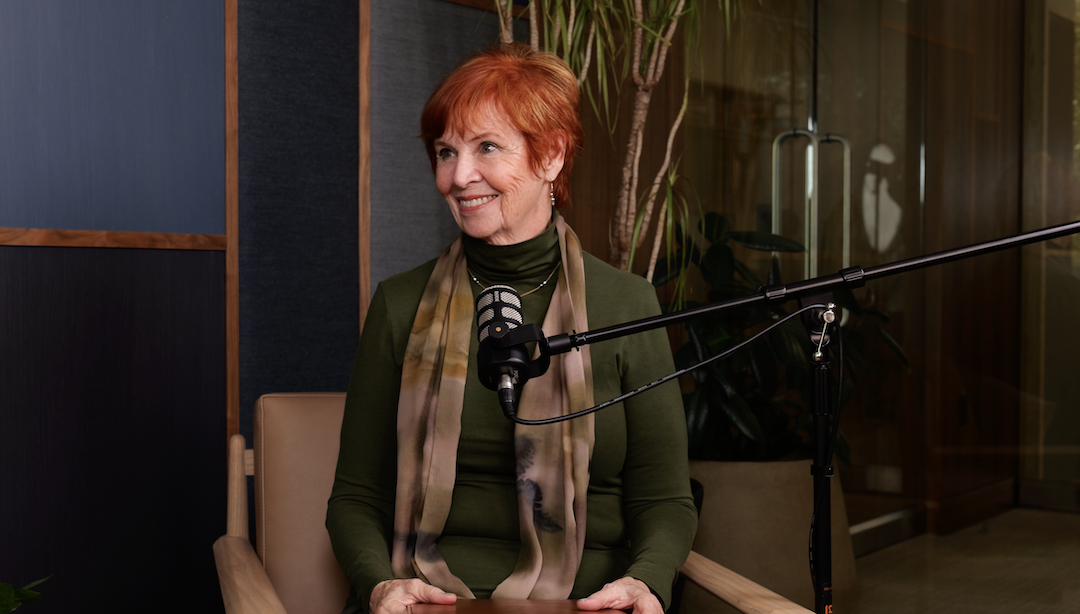
Priscilla: Welcome to Financial Commute. Today we are tackling a silent budget killer: lifestyle creep. This is when your income goes up and your spending immediately follows. You get a raise, you get a new car, you get food delivery every day. Money comes in and it goes right back out. And it does not have to be that way. We want to flip that script and think about lifestyle design. This is where you make thoughtful financial choices that reflect your values. Money comes in and you think about what role it plays in your future. My name is Priscilla Brehm, and I am here today with Kristin Dillon. I am so pleased to have this conversation with you, Kristin.
Kristin: I am so excited. What a wonderful person to get to talk about this with.
Priscilla: Right back at you. We are both wealth advisors and financial planners at Morton Wealth, and I have been in this industry for over 50 years. One of the things I really appreciate about Kristin is the wisdom she brings, the caring for her clients, and her depth of thought. So as we talk about lifestyle creep versus lifestyle design, I think it will be interesting to compare and contrast our experiences.
Kristin: Yeah, I am in the thick of it. I am in the lifestyle design portion and I am not always right about how I do it. I step on the creaky boards a lot. It is nice to have you on the other side, because you have probably made the mistakes and learned the better ways of doing things. So it is a good contrast.
Priscilla: Yeah. Let us talk a little bit. You know, I am a baby boomer. Which generation are you?
Kristin: I am an elder millennial.
Priscilla: Elder millennial. I did not know that was a thing. I am an elder baby boomer. Lifestyle has a lot of different components to it. When you think about lifestyle, or when you are having that conversation with your clients, what are the things that come up?
Kristin: What my income or my bank account affords me. Whether it is how I get to travel, because that is a big priority for me. The cars I drive, how I get to spend my time. Do I get to choose how I spend my time? And the things that I get to purchase and how I shape my use of time.
Priscilla: For baby boomers, we are all about the material things. Clothes, cars, home, private education for the kids, the best colleges. And it is interesting because that is completely different from a lot of younger generations. But I think some of the common components that we hear from clients in terms of lifestyle would be things like life experiences, travel, the home. People are willing to spend almost painfully to maintain or build the lifestyle they want. And then when we start to have the conversation about what that means in terms of their long-term future, that is when we start to see a shift in attitude.
Kristin: I would push back a little on home ownership. I find that a lot of our younger clients, and I have been working on an article about this, are seeing the American dream shift. I remember growing up hearing you do not want to live in a van by the river. And now people are like, yeah, actually I do. Because of how expensive houses are right now, the interest rates, unless you have parents that are able to help you with a down payment, there are a lot of people who say, I am not interested. I would rather live a really great life and do the things I want to do instead of being bogged down by saving for a house that may or may not be in my future. And then there is the ongoing cost of maintaining it. There is a comedian, Bill Burr, who talks about how you buy the house and start this clock of things to fix. By the time you think everything is fixed, the thing you fixed first needs repair again.
Priscilla: So for that generation, lifestyle creep looks different than it did for mine. But it still has a massive impact.
Kristin: Yes, very much so.
Priscilla: When you have thoughtless spending versus thoughtful planning, the decisions we make today have an impact on the rest of our lives. So when you are working with clients who are right in the middle of experiencing lifestyle creep, what are some of the things you talk about to get them to think in a different way?
Kristin: The mindfulness around spending is a big one. We have social media, and it is no longer commercials we are watching. It is one constant commercial and one big highlight marketing reel. I am seeing other people and what they are doing, whether it is skincare or fitness or travel or the latest fill-in-the-blank, and we are constantly being sold. People want convenience, whether it is DoorDash or Postmates. And the spending of money becomes so thoughtless because we are not writing out a check or counting dollar bills. We are just clicking a button. There are constant pressures, reality TV, social media, all bombarding us with the message that if you have this, your life will be this. And so people want that.
Priscilla: You know, it is interesting that you mentioned being bombarded. In the 1950s and 60s, we really only had radio and television and newspapers. And the shows were about nice middle-class families, Ozzie and Harriet, Leave it to Beaver. There was no pressure from the media to buy bigger and better. Then you get into the 70s and 80s, and Dallas came on the scene, and everything had to be bigger, better, more expensive. And then of course there was Lifestyles of the Rich and Famous. And suddenly lifestyles was on everybody's mind, coming out of everybody's wallet.
You have a client story that I think is a great example of not just what lifestyle creep is, but the impact it has on someone's emotional well-being. Can you share that?
Kristin: Yeah. So this particular client grew up not quite middle class, maybe lower middle class. She worked really hard and worked her way up. She was able to have a really good income. She got married, had a kid, and was living her best life, having these grand birthday parties, traveling, buying nice watches. As she made more money, the things she did became bigger and better. And she woke up one day in her mid-40s and realized she had made a really good income for a long time and had nothing to show for it. She did not want to work for the rest of her life.
She was referred to us by another client and started working with us, and it is incredible what she has done. She has been with us a little over a year and a half. Within the first year she paid off her debt, cleared back taxes she owed to the IRS, and started building her savings. She started maxing out her 401k for the first time, built a buffer of over $100,000, and started running again. Working with us, she was able to alleviate the pressure and the circling of trying to figure it out on her own, which freed up her mind to be more present in her marriage, more present with her kids, and to have a direction and a partner to call whenever she felt a little lost.
Right now she is between renegotiating her contract with her current employer and figuring out what is next, because she is also an entrepreneur. She comes to us and says, here is what I am thinking, what do you think? She was debating taking a year off and traveling with her family, and we went through a spending strategy, looked at whether she had enough if she got a severance, and weighed the opportunity cost. A couple of months later she said, I do not know that I want to do that. I do not know that it is worth it. She wants to keep that buffer. She wants to take the severance if that is what she gets and build on it. It is really cool to see how she has changed her thinking from just living in today to thinking long term.
Priscilla: So she went from spending by accident to spending by design. That is a good segue into the other side of lifestyle creep, which is lifestyle design. And you hit on a couple of things with your client's story that I think are incredibly important for someone who wants to be thoughtful with their spending. The importance of having a partner, whether a professional advisor or someone you trust, who you can check your thinking with and who can bring up other options, other ideas, who can help you look not just at what happens today if you make this choice, but how it affects your future a year from now, five years, ten years. That leads to more empowered choices, which is what we are all about.
So we have talked about lifestyle creep and some things about lifestyle design. One of the things that we see with many clients is they get into a little bit of trouble with credit cards. Something looks really attractive right now, so they buy it, put it on the card, and pay it off later. That happens over and over again and the balance balloons with no apparent plan to pay it off. What is your strategy when you are thinking about making an expenditure on your credit card?
Kristin: There are a couple. Amazon is a big culprit of mindless spending. I always suggest removing your credit card from the account so that you actually have to manually enter it, which gives you time to think. Beyond that, putting things in your cart. Unless I need something right now, I put it in my cart, close out the app, and nine times out of ten I completely forget about it. But if I cannot stop thinking about it, then I will go back and buy it. Most times I forget. I often suggest to clients that they pick a day, like Thursdays, to go into their Amazon cart and look at everything: do I really need all of this? If you do, you buy it. If you do not, you delete it. Create a more mindful relationship with how you are spending money instead of just the ease and mindlessness of just buying.
Priscilla: I think also when making any financial choice, especially a purchase, you have to ask yourself: is this something I want or something I need? If it is something you want, why? What role is this purchase going to play in your life? If it is something you need, do you need it now, and do you need the most expensive version? Taking a deep breath, stepping back, pausing for just a moment changes the trajectory of a particular decision. When you start to get into that habit of thinking about your financial choices, it can make an incredible cumulative difference, both in how you feel about what you are choosing and in the financial outcome. Your bank balance will start to go up.
The other thing, and this is a common error: someone will see something on sale for 25 percent off and buy it because they are saving 25 percent. Then they leave it on their credit card, which is accumulating interest at about the same rate, and the benefit of the sale disappears. Whenever there is a purchase on the credit card, there needs to be a plan to repay it. Credit card balances every month should be zero.
Kristin: I often advocate for clients to pay attention and check in on their spending. What is your credit card balance in the middle of the month? I do it myself. I am like, okay, how is my spending this month? Am I able to pay it off? And also, what is the opportunity cost? What am I giving up to have this balance on my credit card? And is that okay?
Priscilla: Also, not to pick on credit cards as the culprit alone, but credit card points are not a good reason to buy something. A lot of people accumulate points but do not really know how to use them effectively. Think of those points as an asset. What is your best use of them? Take some extra time. And having that conversation partner will help in that process as well.
We have all got a shopping mall on our cell phones now. And because of social media, like you are a runner, you have certain shoes you like. How do you decide between the shoe you like, which might be more expensive, and one that is perfectly adequate but less expensive?
Kristin: So as I said, I am in the phase of designing my life and really trying to build quiet wealth so that I am earning more freedom. Right now I just signed up for a race called Hyrox in December with a coworker, and it requires a specific kind of shoe that is stable and that you can both run in and do functional workouts in. I have been waffling about which shoe to get. None of them are inexpensive. The one I want is $130 and it is still in my cart on my phone. I am waffling because I just do not want to be impulsive. I want to make sure it is truly a need and that it is the best shoe for my goal in December.
Right now in my training I have what I need and I do not need those shoes yet. I may be perfectly fine with what I have. And I want to try them on before I buy. So they are just sitting in my cart. I think just taking a breath, waiting, and not going for the impulse and the constant dopamine hit of buying and having the package show up. I am currently in this push and pull of how much am I consuming, how much am I spending, and what am I giving up for this current shopping mall experience.
Priscilla: So some of the points we have hit on with regard to lifestyle design: have a financial partner, whether a professional advisor or someone you trust. Have a plan. Understand whether a financial choice is a want or a need. Think about what value it brings into your life. And if you cannot identify that, then maybe it is a no. It is not about spending money badly. It is about spending money in ways that really do reflect who you are and your values in life. And sometimes it is about giving money away in ways that reflect your values.
Priscilla: Lifestyle creep is not fictional. It is very, very real. And it can cause us to make poor financial choices that might feel really good in the moment but impair our financial peace of mind in the future. We want to encourage you to think first and spend second, or think first and do not spend at all. But it is also completely normal and natural and healthy to enjoy the fruits of your labor. Please try to find that balance. And we are here to help. If you would like to have a conversation partner about your own lifestyle creep versus lifestyle design, give us a call.