June 2026
Featuring
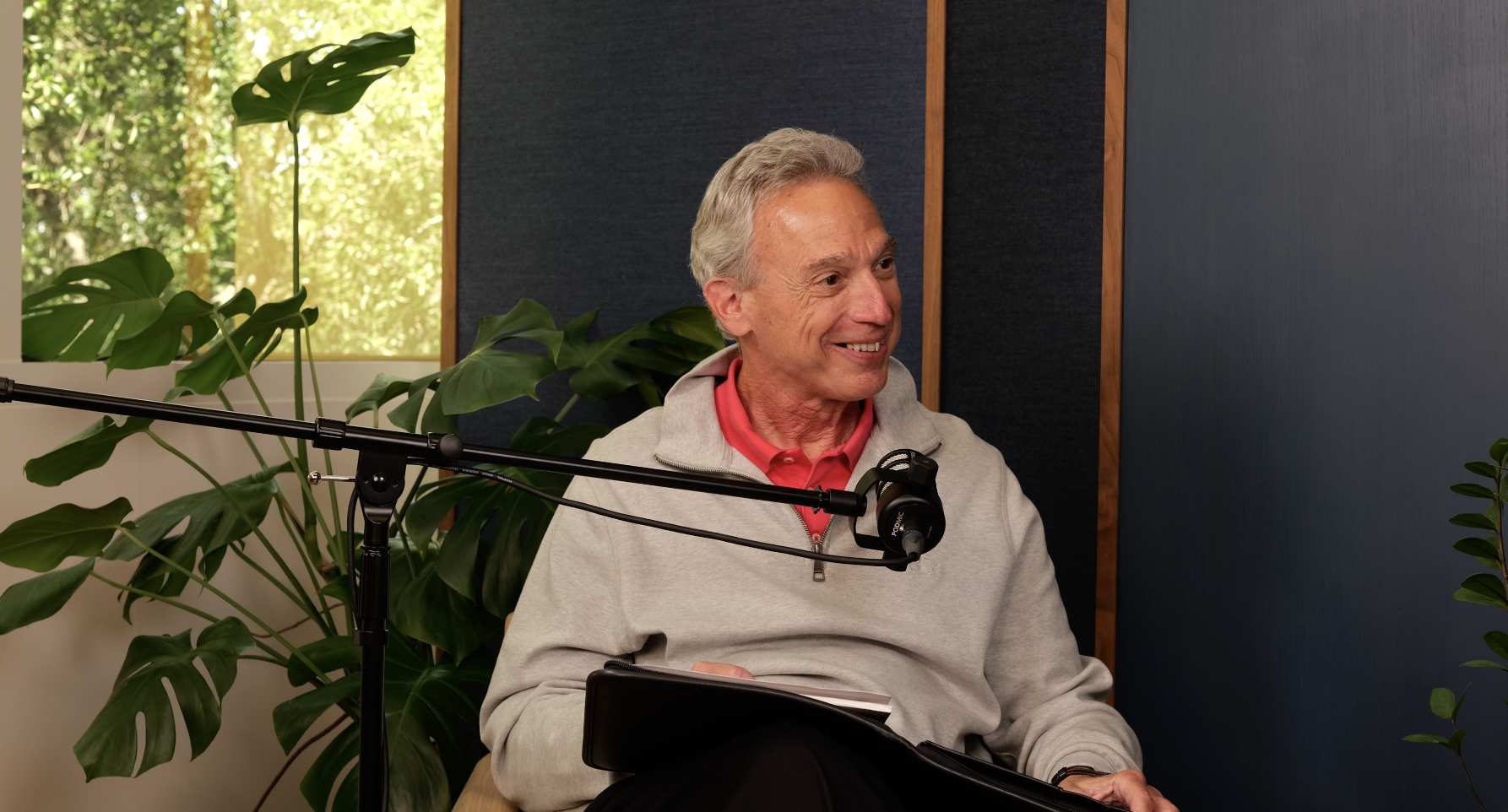
Eric Selter, Executive Vice President, Morton Wealth
Meghan Pinchuk, Chief Investment Officer, Morton Wealth
Most clients trust their wealth manager to make sound investment decisions on their behalf. Far fewer ever get to see exactly how those decisions are made. This episode is for the ones who want to know.
In this special edition of Financial Commute, Executive Vice President Eric Selter sits down with Chief Investment Officer Meghan Pinchuk to pull back the curtain on Morton Wealth's full investment research process. From what triggers a new idea to how funds get vetted, how structures get scrutinized, and what it actually takes to earn conviction, this is the conversation most firms never have in public.
Watch previous episodes:
You're 50+. Should You Be Taking Less Investment Risk?
How to Pay Yourself in Retirement: Strategies to Help Make Your Money Last
0:00 — What does Morton Wealth's investment research process actually look like? Meghan and Eric Selter open by pulling back the curtain on how Morton Wealth approaches investment research — a process most firms keep entirely behind closed doors.
4:15 — Where do new investment ideas come from? Ideas come from two directions: market dislocations the team identifies internally, and opportunities surfaced through Morton Wealth's broader network of peers and relationships in niche spaces like infrastructure and healthcare lending.
8:50 — What does a real investment decision look like from first conversation to funding? Meghan walks through an 18-month process with one equipment leasing fund where the underlying loans were excellent but the structure did not work. The investment only moved forward after the fund agreed to build a new vehicle around Morton's requirements.
13:20 — Why does fund structure matter as much as the investment itself? Post-Madoff, operational due diligence became as important as investment due diligence. Legal controls, third-party oversight, and fund structure are now non-negotiable parts of the vetting process.
18:30 — What questions should you be asking a fund that most people skip? Meghan explains why she leads with what could go wrong rather than what could go right, and why ongoing verification matters as much as the upfront review.
23:10 — How is AI changing investment research? AI is starting to streamline data organization and administrative work, but the people assessment — how a fund behaves under pressure — remains entirely human.
27:15 — How do you end a relationship with a fund that is not working out? It is rarely a sudden decision. By the time Morton Wealth formally exits a relationship, ongoing conversations have usually made it clear to both sides that a change is coming.
How does Morton Wealth decide where to invest? The process starts in one of two ways: an idea comes inbound through the network, or the team identifies a specific market segment that looks attractive and goes looking for the right fund to access it. The trigger for a new search is usually a market dislocation — a moment where something is being mispriced and there is an opportunity to provide liquidity or access an asset at a discount.
Why does fund structure matter as much as the investment itself? Post-Madoff, the standard for due diligence shifted significantly. Today, the legal framework, third-party oversight, and operational controls surrounding an investment are as important as the investment thesis itself. A great investment in a bad structure can leave you locked in at the wrong time, unable to access liquidity, or exposed to risks that have nothing to do with the underlying asset.
How does Morton Wealth decide how much to allocate to any one investment? Allocation sizing comes down to asset class and conviction level. Asset-based investments backed by hard assets are sized larger because there is a tangible fallback if something goes wrong. Conviction also builds over time — a fund Morton Wealth has watched handle adversity well will naturally earn a larger allocation than a new relationship.
How is AI changing investment research? The most immediate impact is in data organization and administrative efficiency. What it cannot replace is the people assessment: understanding how a fund will behave when things go wrong and whether integrity holds under pressure. That judgment remains human.
Does the personality of the people running a fund actually matter? Yes. The real question is how a fund's team behaves when things are not going well. Anyone can have integrity in a good market. The funds worth trusting are the ones whose people handle adversity with transparency, acknowledge problems clearly, and can articulate what they learned. A fund that has never faced a real market challenge is actually harder to underwrite than one that has been tested and came through it well.
Most clients know their wealth manager is making investment decisions on their behalf. Very few understand what that process actually involves or what separates a rigorous research approach from a rubber stamp.
This episode is especially relevant for:
At Morton Wealth, every fund in the portfolio has been through a process built on skepticism, patience, and ongoing verification. The goal is not to find the most exciting investment. It is to find the right one.
Disclosures
Information presented herein is for discussion and illustrative purposes only and is not intended to constitute financial advice. The views and opinions expressed by the speakers are as of the date of the recording and are subject to change. These views are not intended as a recommendation to buy or sell any securities, and should not be relied on as financial, tax, or legal advice. You should consult with your finance professional, accountant, or tax professional before implementing any transactions or strategies concerning your finances.