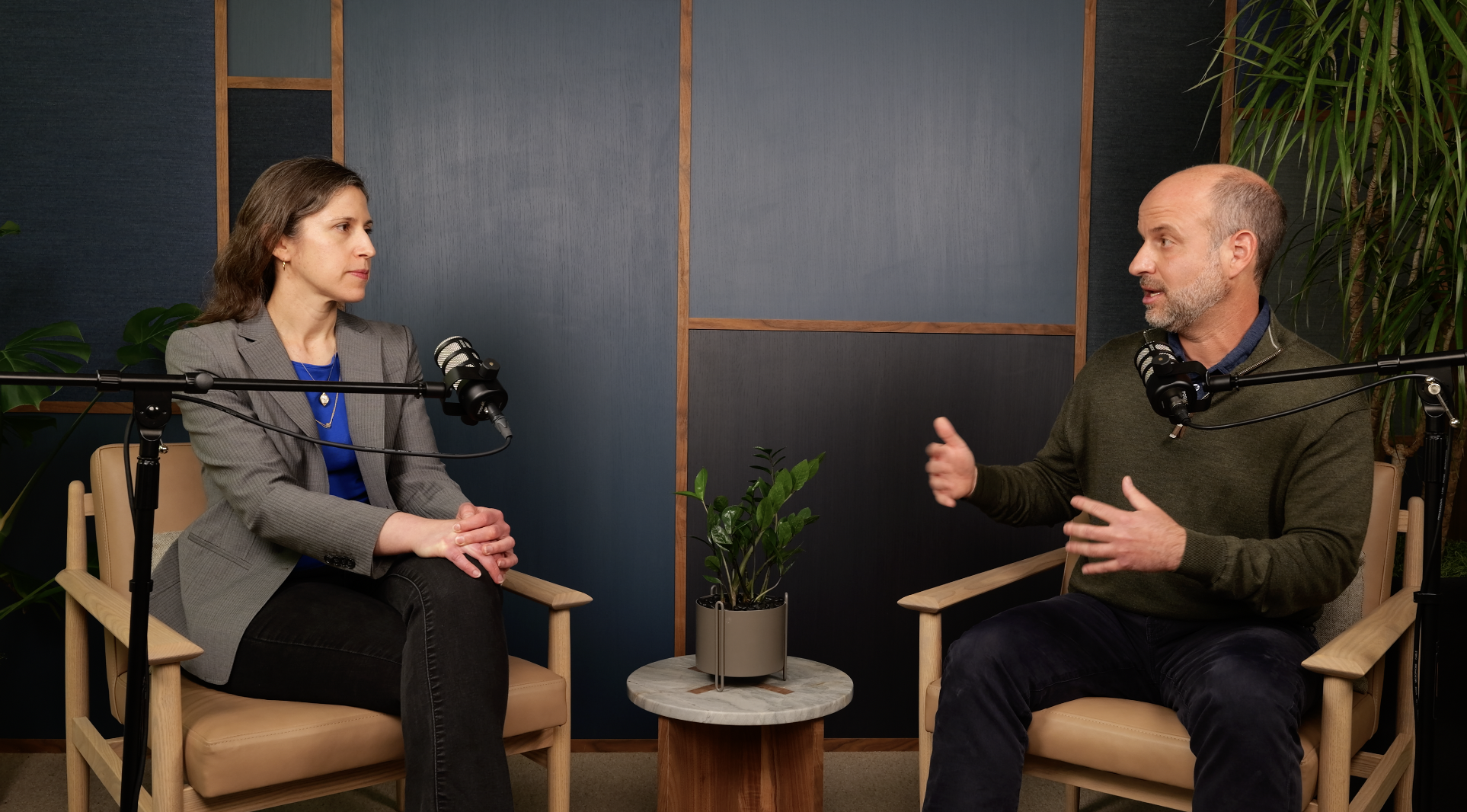
Meghan Pinchuk: Hi everyone. Meghan Pinchuk here with Jeff at Morton. Well it is Friday, April 4th. And the reason I'm giving that context is that markets are rocking and rolling. And Jeff and I are here just kind of dive right into it talking about tariffs and what's going on with markets.
Jeff Sarti: Yeah a lot going on in the markets today as we're recording this. The S&P 500 is down about 5%. That's after yesterday was down about 4.5%. And as we all know now this is related to the news around tariffs that were announced on April 2nd. And the purpose of this podcast is to not talk about the merits or downsides of tariffs.
We've gotten in that past. It's really more about clients are asking questions about their portfolio. They might have concerns how their portfolio is constructed, how vulnerable their portfolio is in this environment. So can you talk about that?
Meghan Pinchuk: Yeah, I can't stress enough. It's very important. And the way we think about it, to just be positioned in advance for volatility. So this isn't something where you can react at least in a worthwhile, efficient manner after you start getting the volatility. I really think it's something that we have been thinking about uncertainty. What does that mean related to tariffs related to debt related to valuations, all kinds of things.
So with that heightened uncertainty, how do you want to be positioned in the event that things like this happen?
Jeff Sarti: And the main aspect in terms of how we're positioned with those concerns? You mentioned it comes down to stock exposure as anything else. We'll talk a little bit about diversification, but stock exposure as a starting point. Can you talk about how clients are typically exposed to the stock market?
Meghan Pinchuk: Most firms, if they only have stocks and bonds as options, you might have, even for a relatively conservative client, you might have call it 50 to 80% of your portfolio in stock. So it's again, that might be considered relatively conservative.
Jeff Sarti: Drastically different than our approach.
Meghan Pinchuk: Completely different, I'd say, when we look at our average client overall, it's probably closer to 25% for portfolio. And that's a big range. We have clients with meaningfully less with meaningfully more. But it's just because we have all these other tools. It just doesn't have to be as big a position in the portfolio.
Jeff Sarti: So even to just put that number in context, I think clients should, if they're concerned about risk in their portfolio, they really should look at their stock exposure. So let's say a client has 25% of their portfolio in stocks. And let's say stocks are down about 10%. Then that component of the portfolio will your portfolio will be down about 2.5%.
Now the important aspect is you have 75% of your portfolio in all sorts of other things.
Meghan Pinchuk: What's the rest of it?
Jeff Sarti: So can you talk more about that? Because again, we have lots of other asset classes in the portfolio.
Meghan Pinchuk: We do. And so to try to keep it high level, broad categories, I think one thing that's been really impactful for us this year is our gold exposure. Yeah. And it's fairly significant again, especially relative to others in the industry. Gold's up meaningfully this year.
Jeff Sarti: Up like mid-teens percentage.
Meghan Pinchuk: Wise. And then we have a little bit of that. And even in gold mining stocks which are up even more. But that allocation has been very powerful. This year in terms of offsetting certain losses.
Jeff Sarti: Can you talk even just going back to stocks, we don't just have U.S. stocks, but we have international stocks in the diversification benefits with that.
Meghan Pinchuk: Yeah. So long. There's times where we think of U.S. and international stocks as being something of diversifier. There's definitely times where they move together.
And so I think we don't quite count on that helping in terms of always being an insulator. On the downside, this this period, it happens to have been helpful so far this year. So international stocks while US are down meaningfully, international are about flat.
Jeff Sarti: In recent days they've gotten hit. But even despite the hit in recent days yeah year to date international stocks are flat right.
Meghan Pinchuk: Despite the S&P being down 12.
Jeff Sarti: 12 or 13 at this point.
Meghan Pinchuk: So that's a big difference. That's actually been really helpful in portfolios because a decent percentage we have more in U.S but a decent percentage of our allocations to stocks are in international. So there's pieces of that that are definitely holding up better than the broader market at this point. And then now thinking more on the credit side of that.
So for equities or stock and then thinking more on the credit side. But bonds are doing fine now or 2% on the year. And you know it's tricky being early in the year because ideally if things kind of go as planned, that continues to accrue throughout the year. Right.
Jeff Sarti: So that's not an annualized return. That's just the return on bonds over the first three years.
Meghan Pinchuk: That's just for the short period of time. So if we were having this volatility at the end of the year, you theoretically have more return on the bond side to help cushion things. And you'll get there throughout the year.
Say with private lending. Yes. Lending now is a big allocation for us across a number of different asset classes. And that's a call it 2 to 3% typically for that first quarter. Yeah. And not that if the world continues to have issues recession all those things. Not that these asset classes are completely insulated but they should be different.
Right. And that's the real point of true diversification is something behaves differently. They're not moving in lockstep on a day to day basis.
Jeff Sarti: I'm glad you kind of walk through high level of those various asset classes, because stocks are one of truly many asset classes. Those other asset classes are not just rounding errors in client portfolios. And again, every client portfolio is going to be different depending on their risk profile. But throughout most of our client portfolios, you can see that our portfolios have really held up well here today.
Yeah. Given that diversification.
Meghan Pinchuk: Many of our more conservative client accounts have meaningfully more in private lending as an example, in bonds than they do in stocks.
Right. Those are just going to be a lot more insulated. So again, clients are going to see the headlines. You're going to see some of these challenging challenges. And that's not the whole story. So that's just the important thing to keep in mind is the stock market and how that's impacting. It's not that it won't have an impact.
Sure. That's not the whole story.
Jeff Sarti: So diversification and some we talk about so much, I think just even going back to the philosophy around why we diversify so much, it comes down to uncertainty. And this is such a perfect example of an uncertain environment that we currently live in. The world knew that April 2nd was coming, that these announcements were coming. We were all theoretically prepared, but still, even with the knowledge that those announcements of tariff policies were coming, the market's still dropping after those announcements.
You can't prepare for these things in advance.
Meghan Pinchuk: You can't too, because some people, it's easy to be a Monday morning quarterback to look back and say, okay, well, you knew this was coming. Why didn't you do x, y, z? And again, we are prepared to bless us. But even generally yeah I would say you didn't know if let's say the tariffs had come in at a lower level, right people than the market was expecting.
This market could have rallied meaningfully. And so that's part of this. When you have this type of uncertainty in the market, it's very unstable. And there's a lot of you can have big rallies upwards even from here. Right. We know Trump could pull it back. Sure thing. This could be more of a negotiating tactic. He pulls it back and all of a sudden the market takes off.
So it's very hard to predict that. And to be honest we just don't really try.
Jeff Sarti: Yeah. Along those lines again we have a very different approach to how we treat uncertainty. We embrace it very differently than most firms or Wall Street at large. What do they try to do? They try to outsmart it out and predict an unknowable future. And I'll just quickly highlight an analogy I used in years past, and I think we shared it with our audience.
It's around the ocean, the ocean and waves being inherently unpredictable. That's like the markets or the economy. How most investors, Wall Street at large, handle that uncertainty. It's the surfing analogy. They hone their craft around surfing, timing the perfect wave when they get on or when to get off. Perfect example. My inbox. Right now, my email inbox is flooded with Wall Street firms talking about which sectors are going to benefit or be hurt by these tariff policies.
Which countries are going to benefit or be hurt by these tariff policies. And to your point, that's such wasted energy because Trump might change these policies.
From now. So it's again misplaced energy that I think they're trying to outsmart and unknowable future. Our approach is very different, right? Instead of trying to surf the waves, we throw that surfboard off to the side. And when you're thinking about your nest egg, we build a bigger boat, right? We build a big, resilient boat. That's diversification, right?
That will be more insulated from market moves, and we'll just be fine no matter what way. The way the shape of the waves and the underlying currents will be. Yeah.
Meghan Pinchuk: And I think again, we're seeing that now and it's a short term period. But yeah, just knowing that that is the philosophy and leading into it. The portfolios are positioned that way.
Jeff Sarti: So listen, we're monitoring this closely. But big picture. We really feel very comfortable and confident with how the portfolios are currently positioned. But we're obviously watching all these things closely, closely. And in the meantime, please don't hesitate to, reach out to your Morton Wealth advisor if you have any additional questions. Thanks.