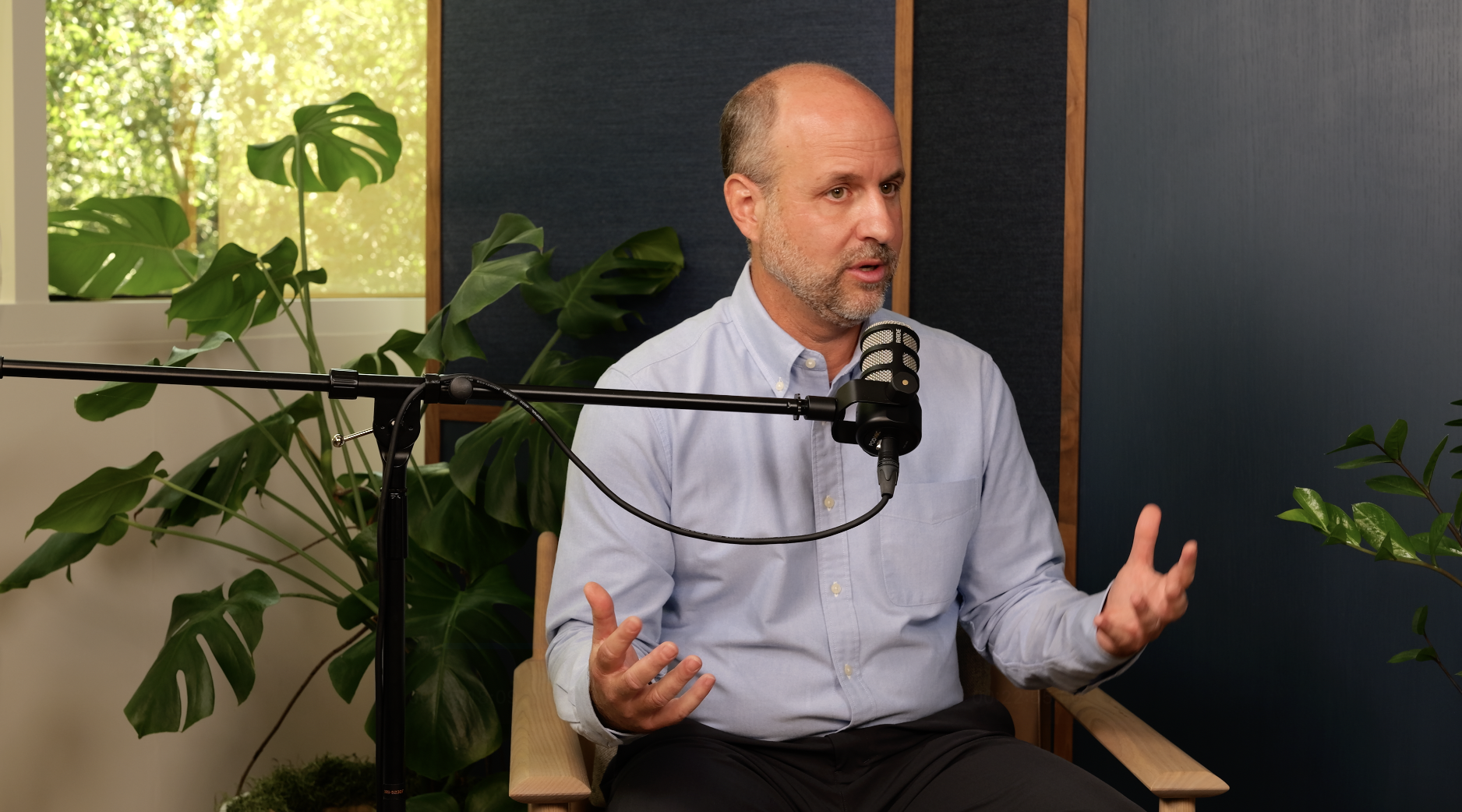
Chris: Jeff, I am really excited about the conversation today. Stocks are at all-time highs, but consumer sentiment has hit its lowest point since the Vietnam War. It is crazy to think about. Markets are at all-time highs. There should be some euphoria. But consumer sentiment is as low as or lower than it was during the Vietnam War. You just came out with your twelfth Healthy Skeptic letter.
Jeff: I cannot believe it has been twelve. Yeah.
Chris: One of the reasons we are having this conversation is not only to highlight what is going on in this most recent Healthy Skeptic letter, but our Investor Symposium is coming up on October 29th, and you are going to be doing a deeper dive on what it means to be a healthy skeptic and covering those ten principles. One of the biggest things is tuning out the noise. Because if you follow these headlines, every day there is a new one that is causing somebody to want to react. It is just silly.
Jeff: You just hit on it. Which do you lean into? The way of stocks at all-time highs, or the negative sentiment around consumer sentiment nearing all-time lows? It is frantic news media where you are pulled in both directions, which makes it very challenging.
Chris: Even AI. There is so much technology spend. A portfolio manager came in last week and told us all the reasons why they love stocks. And underlying their data, US growth is 50 percent technology spend, the spend on AI. But then there are headlines saying AI is going to replace all your jobs. Robots that can paint walls. You are not safe either.
Jeff: Again, a great example of the noise. Do you lean into the tremendous productivity boom that is going to happen with AI? That is powerful and true in a lot of ways. But the flip side is there are obviously a lot of negatives around AI, from job losses to the tremendous capital expenditure on data centers and the risk of tremendous overbuild. So is it a boom or is it going to be a bust? We really do not know. A lot of noise in the media taking both sides of the story.
Chris: Other headlines that are sort of boom or bust: markets at all-time highs, consumer sentiment at all-time lows. AI is going to be great and amazing and provide so much productivity, but you are probably out of a job. Then there is the geopolitical stuff with Iran and the Strait of Hormuz. One day everything is solved. The next day, we are going back to war.
Jeff: And we have a president who is tweeting daily. One day it is a tweet with tremendous optimism. The next day, more threatening tweets. Which side of the fence are you on? The noise can be very paralyzing, especially from an investment point of view.
Chris: The Fed chairman said he is going to issue some short-term bonds and buy some long-term bonds to bring rates down. And then there was a headline saying sell all your bonds and buy gold. A month ago the headlines were saying gold is dead, the rally is done, it was up 70 percent last year, go away from gold. How do you make investment decisions based on these paralyzing headlines?
Jeff: It speaks to the letter. The punchline: tune out the noise. You have to tune out these headlines. We are going to have strong long-term views of the world in how to position portfolios. But to your point, we are long-term believers in gold. And if we had read stories just a month ago, we would be selling gold. And now should we be doubling up on our gold purchases? No. Nothing has really changed from a long-term point of view.
Chris: That goes into the letter and our core tenants. The first one is build for resilience, not prediction. It is really based on tuning out the short-term noise.
Jeff: Starting with the second part of it, not prediction. That gold example is a perfect one. If we really leaned into the noise and headlines we would be making predictions around investments, whether it is the price of oil or gold. We are tuning out the noise because we are not in the prediction market. Instead, what do we spend our time on as an investment team? Building more resilient portfolios.
That comes into play in a few different ways. The first is around stock allocation. Our stock allocation as a firm is around 25 percent. A wide range for clients, as low as maybe 10 percent, as high as 40 or 50 percent. But generally speaking it is a healthy allocation. Now compared to most firms, that is much less. Most firms have 50 to 80 percent of their portfolio in stocks.
Stocks have a place in the portfolio. But do they add to resilience with regards to portfolio construction? No. Stocks are a volatile asset class that can be moved by the noise. They have their place. But outside of stocks, what do we look for? We look for other things that are going to add more resilience to the portfolio and protect on the downside.
Chris: That takes us into our second core tenant, which is diversify where it actually counts. A prediction is just a coin flip. I had a client reach out because there was a health care stock that had news about a cancer treatment, and the stock shot up. The client asked: should we buy it? That sort of reaction can be dangerous because if you look at the actual fundamentals, which the market is largely ignoring today, especially with how expensive technology and AI stocks are, it does not make sense from a valuation standpoint. In times of heightened valuations, reduce your exposure and find other places that can have meaningful returns.
Jeff: Valuations are a key aspect of resilience. When things are expensive we are going to have less of that. When things are cheap, that is when we lean in. A lot of what we lean into with that resiliency mindset is necessity-based industries. We search for opportunities in healthcare, in the food industry, in delivery of food. People need to put food on their table. People go to the doctor. Those are more resilient asset classes.
Another thing we are really passionate about is on the lending side, having assets as collateral to back your loans. Simple example: you make a loan on an apartment building. Ideally the landlord pays you regularly and things are good. But what if there is vacancy and the landlord stops paying? You have the keys to the property. You have the asset you can grab to protect your principal. Same with a loan to a retail company. If something goes wrong, you have inventory you can lean on. As long as you can sell it and recoup your loan, you are going to be okay. That downside protection, really thinking through if things go wrong, is where a lot of our resilience themes come into play.
Chris: If you just own stocks and we go through a bad recession or a financial crisis like 2008, you wake up and your stock portfolio is down 50 or 60 percent. There is nothing there to protect you. But in some of the other things we are looking at, there are real assets you can grab onto.
Meghan and I recently did an update on one of our investments, and she mentioned a new strategy involving nitrous oxide delivery at hospitals. I never knew that if you were born prematurely there is a treatment for premature babies that involves nitrous oxide, which is very difficult to transport because you have to keep it extremely cold. This company has worked on a technology that does tankless nitrous oxide delivery. It is safer, requires less storage, and a lot of people are going to adopt this. This is diversifying where it really counts because you do not care about valuations or interest rates. If you have a baby that is premature and needs this treatment, you are going to do it.
Jeff: That is a great example of where the theme around diversification really comes to life. Our industry at large preaches diversification, but generally speaking I think the finance industry is stuck in the stone ages when it comes to it. The theories around diversification were created in the 1950s at the University of Chicago. Brilliant people who really evolved the concept around not putting all your eggs in one basket. But it really started and stopped there and has not moved forward very much.
The challenge: let us say you have a handful of stocks across different sectors. Technology: Apple, Microsoft, Nvidia. Healthcare: Eli Lilly, Merck. Banks: Wells Fargo, JPMorgan. Theoretically a very diversified pool of stocks. But what happens on the downside? That is really what diversification is for. It is an insurance policy. And when you hit tough markets, the rules around diversification utterly break down. Extreme example would be 2008. It did not matter if you had a banking stock or a healthcare stock or a technology stock. All of those things go down at the same time. Correlations go to one. Very different than if you had other pieces of the pie that behave differently. Like that nitrous oxide treatment. Babies in the NICU are still using it regardless of what is happening in the stock market.
Chris: It takes me back to about ten years ago. If you looked at two of the best investors from the late 70s all the way to 2015, they were Warren Buffett in stocks and Bill Gross in bonds. And that was predicated on the fact that interest rates from the late 70s until the mid 2000s went from the high teens down to virtually zero. So both stocks and bonds were more correlated than people thought.
Jeff: But they were correlated in the right direction. Stocks went up and bonds went up. We were very spoiled.
Chris: Now we are in a different situation. Starting in 2022, interest rates started rising, going from zero to about four and a half to 5 percent. Bonds and stocks lost money in the same year. People thought they were diversified. Our answer was: no, you have to look outside of just those asset classes.
Jeff: Going back to the academia in the 1950s around diversification, broadening your stock portfolio and bringing in bonds makes sense. We do that as well. But 2022 is a perfect example. If we are in choppy interest rate land or potentially rising rates with sticky inflation, stocks can be challenged and more importantly, bonds, the supposed safe haven, can be challenged too. Stocks were down, the S&P was down roughly 18 percent. Bonds, the broad-based bond index, was down 13 percent.
Chris: Your safe money was not safe. Now we were positioned very differently in bond land so we did not have that type of exposure. But for traditional investors to have both stocks and bonds go down at the same time, you really were not diversified. And if you have lots of different asset classes, private lending, real estate, gold, that move in different directions, knock on wood, you will be okay in that type of tough environment.
Chris: For some people, 13 percent might not sound like a lot. But the bonds you owned going into it were earning maybe 2 percent a year. So fast forward six years, you are barely breaking even over that period. A 13 percent loss at that time was astronomical.
Chris: That gets me to our third tenant, which is generate income. We focus not only on building resilient portfolios and diversification, but why is generating income so important?
Jeff: From a client point of view, all things being equal, more income is better. It is wonderful for a client's portfolio to generate regular income rather than waiting solely for price gains on stocks. For a client in retirement, it can replace your salary. Maybe you are not even in retirement, but to have extra sources of income within your portfolio is very powerful. You can use it to support your lifestyle, and if you have some extra cash flow left over from dividends that spill off in the portfolio, you can reinvest.
Clients probably see this all the time. We are pretty active in trading portfolios. Not necessarily because we have to reposition portfolios so much. It is because we get regular income that spills off and we can rebalance in real time without having to sell other assets.
From a portfolio management point of view, income is very powerful because it is a real-time indicator of the health of the underlying investment. If one of our investment managers makes a loan to a company and the next quarter that cash flow comes in at a lower level, in real time that is a signal. Red flag. Something is wrong with that borrower. You can course correct and protect that loan.
Chris: You can have them put up more assets or more collateral.
Jeff: Exactly. Very different from a growth stock with no income. We did a podcast a couple of months ago on a space IPO. Within a week or so it went from around 135, shot up to 210, and then got cut in half a few weeks later to 110. Is there really fundamental information in that price signal? No. It doubled and then got cut in half within a matter of weeks. Which do you believe? The 210 or just a few weeks later, the 110? The answer is we really do not know. Very different from income, where in real time you can better understand the health, or in unfortunate situations, the lack of health in an underlying investment.
Chris: I would love for a client to challenge me on this, because in working with hundreds of clients over the years, in very few occasions do clients make purchasing or spending decisions based off of asset value on a statement. It is almost always predicated on how much income they have coming in. That is what causes them to take a vacation, to help out their kids, to buy a car, to make spending decisions. It is almost always based on how much income they have coming in.
You mentioned something in the letter about the importance of diversifying income streams. If you are investing through us, you are not just replacing your salary with one income stream. You have several hundred different sources of income coming in, and that is helping you as well.
Jeff: Combining tenants two and three. Diversified income. We do not want your income to be subject just to a couple of different sources. We want that diversified across a number of sources. If in unforeseen circumstances one of the income sources dries up or underperforms, you still have lots of other sources of income to make up the difference.
Chris: I am not trying to pick on our industry and our competitors, but talking about our core tenants: build for resilience, not prediction; diversify where it actually counts; and generate income. Why do not most other firms have the same viewpoint and philosophy on diversification and some of the alternatives that we leverage?
Jeff: There are a bunch of different reasons. As a starting point, this work is hard. We have a whole team that has been doing this. And not just the expertise we have, but the experience. I joined the firm 20 years ago in 2004. We were doing these types of investments before I even joined. Easier said than done to just flip on a switch and build out an investment team that can take on this type of expertise.
The second aspect: there is business risk to look different in our industry. Safety in numbers. Our industry is very sticky. Clients tend to stay with their advisors. And even in 2008, if your portfolio underperformed and you had a lot of stocks and your portfolio got hit, there is safety in numbers because the large Wall Street firm can simply say: no one saw that coming. And look at the firm next door. They underperformed just like us.
Chris: Everybody else is in the same situation as you are. One of the reasons why I joined Morton back in 2018 is I was really fascinated by our ability to look beyond stocks and bonds. If you look out the window and you see a car wash or an apartment building or just about any business, there are a lot of different ways to help make, protect, and grow somebody's money. It does not just need to be the S&P 500 and some bond funds.
And our size has something to do with it as well. We manage around $3.5 billion in assets. We are large enough to be nationally recognized, but small enough to take advantage of unique opportunities. If we come across a $300 million investment opportunity, a lot of the bigger firms are going to look over it because they cannot scale it across their clients' portfolios. Our size helps us play in this space much better.
Jeff: I agree. We are kind of the perfect size. Large enough that we have access to all of those name-brand opportunities, but biased toward some of those smaller, niche opportunities that are capacity-constrained where we think we can generate a little bit of extra return.
Chris: Well, Jeff, thank you so much for joining me today. If any of you are interested in learning more about what it means to be a healthy skeptic, please join us on October 29th at our Investor Symposium. It is all about tuning out the noise. Thanks, Jeff.
Jeff: Thanks, Chris.